6×4 vs 8×4 Dump Trucks: Choosing for Your Work in Africa
Compare axle layout, legal payload, body size and route conditions before choosing a HOWO or SHACMAN dump truck.
Start with the material and the route
A truck carrying sand on public roads has a different brief from one moving rock inside a quarry. Write down the material, target load per trip, daily distance, gradients, loading equipment and unloading space. Include any bridges or tight site entrances. This gives you a useful basis for comparing vehicles instead of choosing from horsepower or appearance alone.
What the axle layouts tell you
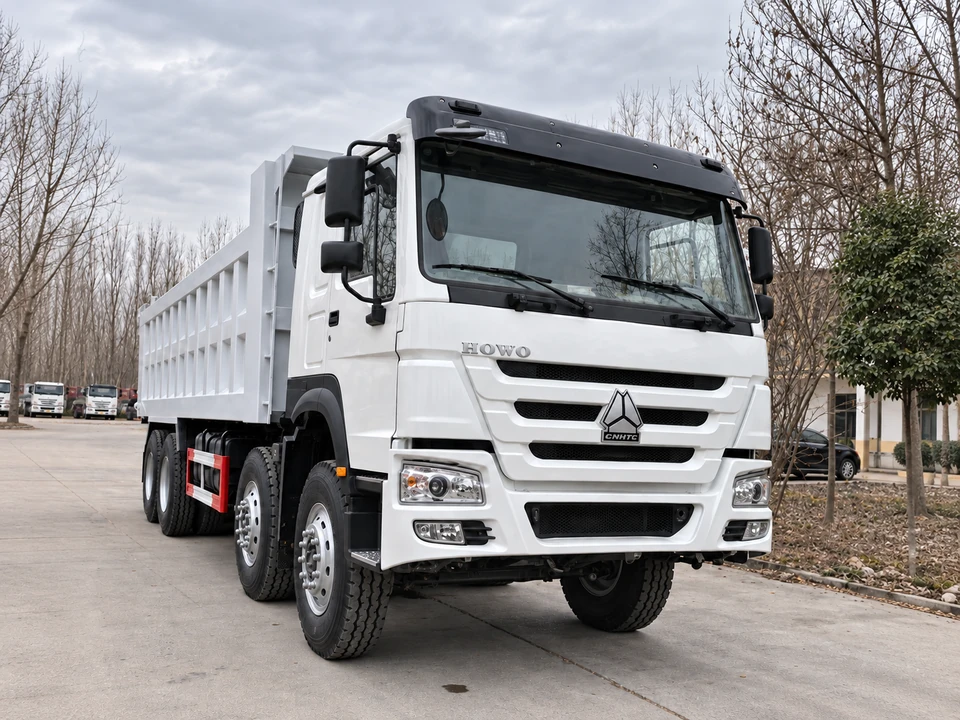
A conventional 6×4 rigid dump truck has three axles, with two driven axles. A conventional 8×4 has four axles, usually with two steering axles and two driven axles. The additional axle changes load distribution, but does not give every 8×4 the same permitted payload. Check the actual axle ratings, vehicle weight, dimensions and local limits for the offered truck.
Compare body volume with usable payload
A large body is not proof of a higher legal payload. Material density determines how much a full body weighs; body, chassis, tyres and permitted gross weight also matter. Ask for body dimensions, steel specification, tipping equipment and vehicle weight in writing. Have the supplier relate these details to your material and have your local adviser confirm road limits. Keep proposed capacities separate from confirmed ratings.
Ask for two quotes using the same brief
Request a 6×4 and an 8×4 option for the same job, with the same vehicle condition and quotation scope. Compare tyre sizes, service access, turning space, expected operating costs and delivery arrangements. There is no single axle layout that suits every African route. Send your load, route, destination and quantity with your enquiry so the comparison addresses your operation.